SLM Engineering:
End-to-End
A 4-week live bootcamp taught by Dr. Sreedath Panat (MIT PhD). Take a small language model end to end, from raw data through tokenization, pretraining, fine-tuning, alignment, inference engineering, and deployment.
Can't attend live? All sessions are recorded for lifetime access.
“If you want to understand LLMs beyond API calls, the best way is to build one from the ground up.”
Hear from the bootcamp instructor,
Dr. Sreedath (MIT PhD)
A quick word on what you will build, why it matters, and how the 8-lecture bootcamp is structured.
Small models are the next
enterprise standard.
67% of enterprises prefer on-premise AI. Open-source SLMs deliver 10x cost savings over cloud APIs. The shift from massive models to efficient, domain-specific ones is accelerating.
Enterprise SLM Market Size
Open-Source & On-Premise AI - Global
Source: Grand View Research · Markets and Markets
Open-Source AI Unicorns & Funding
The open-weight SLM ecosystem is exploding
Sources: TechCrunch · Crunchbase
“I think AGI may come in under 1 billion parameters.”
Karpathy has argued that true general intelligence could emerge from small, efficiently trained models - not trillion-parameter behemoths. This is exactly the thesis behind enterprise SLMs.
The people building AI
are betting on small.
From Eureka Labs to Meta to HuggingFace - the consensus is clear. Smaller, domain-specific models are the future of enterprise AI.
“LLM model size competition is intensifying... backwards! My bet is that we'll see models that 'think' very well and reliably that are very very small.”

Andrej Karpathy
Founder, Eureka Labs
“My prediction: in 2024, most companies will realize that smaller, cheaper, more specialized models make more sense for 99% of AI use-cases.”

Clement Delangue
Co-founder and CEO, HuggingFace
“My main research goal is to make AI accessible so that everyone can tinker with AI, learn from it, and integrate it and use it in their own work.”
Tim Dettmers
Creator, bitsandbytes and QLoRA
“We have a handful of frontier labs that determine this set of AI models that are served the same way to everyone, and they're very expensive to adapt. I think that doesn't need to be true anymore.”
Sara Hooker
Founder, Adaption Labs
“Open source AI foundation models will wipe out closed and proprietary AI models, for the same reason Wikipedia wiped out generalist commercial encyclopedia.”

Yann LeCun
Chief AI Scientist, Meta
“If you want to understand LLMs beyond API calls, the best way is to build one from the ground up.”
Sebastian Raschka
Author, Build a Large Language Model (From Scratch)
Built for engineers who want to go deep.
- Engineers transitioning into LLM engineering, NLP, or enterprise AI
- Developers building AI-powered products - chatbots, search, document Q&A
- Engineers who want to go beyond API calls - to building and training models
- Researchers who need production engineering depth alongside theory
Leave production-ready.
Enterprise AI interview question:
“Design an enterprise SLM system that fine-tunes on private data, supports RAG with permission-aware retrieval, and deploys on-premise with sub-100ms latency. Walk me through the architecture.”
Asked at companies building enterprise AI products. You will have a complete answer.
- Build, train, and deploy enterprise SLMs from scratch - transformers, SFT, RLHF, quantization
- Design efficient training pipelines with LoRA, QLoRA, and distributed training
- Implement RAG, tool calling, and agentic workflows with small models
- Deploy models with vLLM, llama.cpp, and production inference servers
- Build industry-level portfolio projects from hands-on capstone work
The complete toolkit.
One SLM bootcamp.
Go from zero to building, training, and deploying enterprise-grade small language models in Python.
Transformer internals
Understand every layer of the transformer: attention, feedforward, RMSNorm, and rotary positional encoding from first principles.
Data curation and tokenization
Source, clean, and deduplicate a corpus. Train tokenizers from scratch and format data for pretraining, SFT, and preference tuning.
Pretraining from scratch
Train a language model from a blank slate. Implement the full training loop, apply scaling-law economics, and read the loss curve.
Fine-tuning with LoRA and QLoRA
Run supervised fine-tuning and parameter-efficient adaptation. Tune ranks, quantize to 4-bit, and decide fine-tune vs RAG vs prompt.
Preference tuning and guardrails
Align models with reward modeling, DPO, and RLHF. Add moderation, refusals, and prompt-injection defenses on top.
Evaluation and retrieval (RAG)
Build evaluation suites with LLM-as-judge and golden sets. Stand up retrieval with hybrid search, reranking, and grounded citations.
Inference engineering
Reason about prefill versus decode, KV-cache memory, and quantization. Serve with paged attention and continuous batching, then benchmark.
Deployment and operations
Ship endpoints and streaming APIs. Add observability, drift detection, canary rollouts, and a retrain lifecycle for production.
The full training pipeline.
End to end.
From raw data to deployed model: every stage of building an enterprise-grade small language model.
Raw Data
Web crawl, books, code
Clean & Format
Dedup, filter, chunk
Tokenizer
BPE / SentencePiece
Embeddings
Learned vectors
Transformer Block
Next-token prediction
Pre-training
Cross-entropy loss
SFT + RLHF
Alignment & safety
Inference
KV Cache, vLLM, Quantize
Raw Data
Web crawl, books, code
Clean & Format
Dedup, filter, chunk
Tokenizer
BPE / SentencePiece
Embeddings
Learned vectors
Transformer Block
Next-token prediction
Pre-training
Cross-entropy loss
SFT + RLHF
Alignment & safety
Inference
KV Cache, vLLM, Quantize
8 days of building.
One complete education.
Each day builds on the previous. By the end, you'll have built a complete enterprise SLM from scratch.
- The cost, latency, and privacy case for small models
- Attention, feedforward, RMSNorm, and RoPE from first principles
- MQA and GQA, parameter counting, and decoding strategies
- Scaling laws and the case for compact 100M to a few-billion models
- GPU memory math: how model size drives deployment cost
- Build a minimal transformer forward pass and read its next-token distribution
The tools that power
production SLMs.
You won't just learn theory — you'll build with the same tools used to train and deploy real enterprise language models.
Build something
you can actually ship.
The bootcamp ends in one capstone: a small language model for legal contracts, built end to end and deployable on-prem.
A confidential legal contract assistant
Take a small language model from raw contracts to a running, on-prem endpoint. It reads an agreement, extracts and classifies the clauses, flags privilege and personal data for e-discovery, and answers questions grounded in the document with a citation to the exact clause.
- Clause extraction and classification, trained on annotated contracts (CUAD)
- Privilege and PII detection for e-discovery
- Retrieval with citations back to the exact clause
- Quantized and deployed on-prem, so confidential files never leave the building
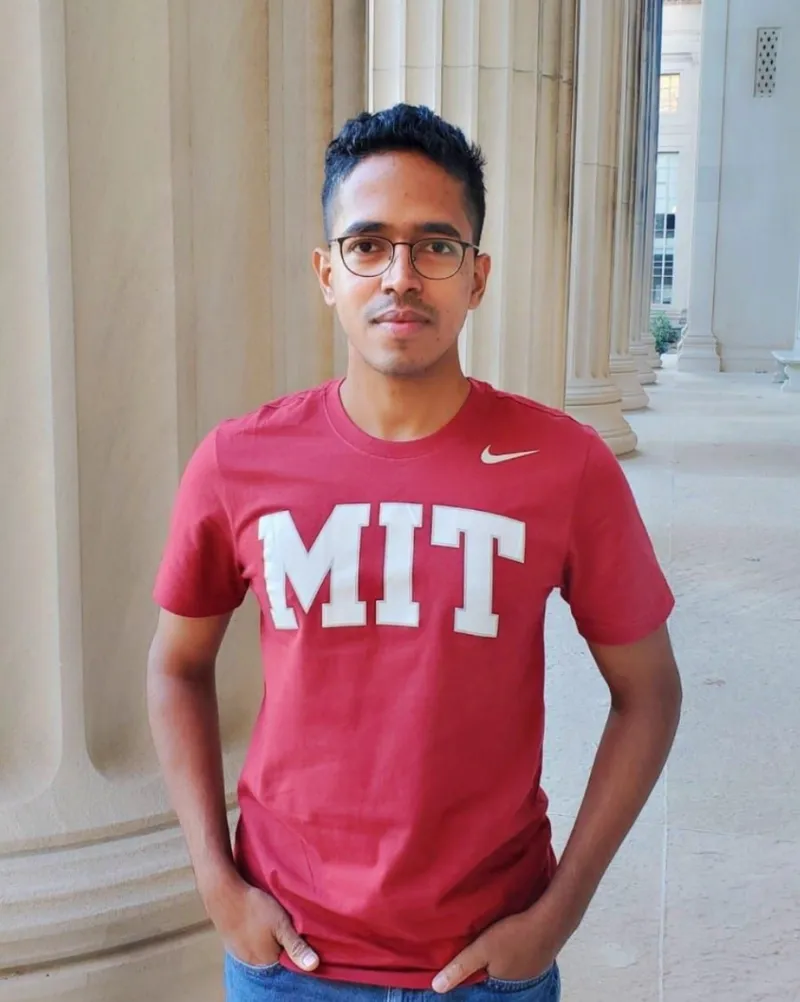
Dr. Sreedath Panat
MIT PhD · Vizuara AI Labs
Dr. Sreedath Panat
MIT PhD · Co-founder & Director, Vizuara AI Labs
Dr. Sreedath holds a PhD from MIT and is the co-founder and director of Vizuara AI Labs. An IIT Madras graduate and department gold medalist, he has built a 200K+ subscriber YouTube channel and co-authored the Manning bestseller “Build DeepSeek from Scratch”.
His teaching philosophy: visual intuition first, mathematical rigour second, hands-on implementation always. Every concept is taught from scratch - no hand-waving.
Have questions? Reach out at sreedath@vizuara.com
- All 8 core lectures personally delivered
- PhD from MIT - rigorous technical foundation
- IIT Madras graduate & department gold medalist
- Winner of the Langmuir Award
- Co-author of Manning bestseller "Build DeepSeek from Scratch"
- 200K+ YouTube subscribers · 115K+ LinkedIn followers
Start your research with a head start.
Don't start from scratch. Tell us your topic of interest and we'll generate a personalised research roadmap and an initial version of your research paper - delivered asynchronously, so you can hit the ground running from day one.
What's in the kit
Personalised Research Roadmap (PDF)
You tell us your topic of interest. We generate an 8-week structured plan with milestones, deliverables, and acceptance criteria - tailored to your specific SLM research area. Includes literature review scope, training pipeline design, experiment matrix, and manuscript timeline. Delivered asynchronously.
Initial Research Paper Draft
We generate an initial version of your research paper - research questions framed, methodology outlined, related work surveyed, and experiment setup defined. You don't start with a blank page - you start with a 6-8 page scaffold ready to build on. Delivered asynchronously based on your topic.
Curated Paper Reading List
12-15 handpicked papers relevant to your topic with reading order, key takeaways, and connections between papers. Includes a literature matrix template for systematic tracking.
Starter Code Template
A clean, documented codebase scaffold for your SLM research project - model loading, training loop, evaluation pipeline, and experiment config. Ready to run on day one.
Example research topics
Your roadmap is personalised to your background and goals. Here are some SLM topics our students have worked on:
Knowledge Distillation from Large to Small Language Models
Efficient Pre-training with Data Pruning and Curriculum Learning
Domain-Adaptive Fine-Tuning for Enterprise Legal/Medical SLMs
Quantization-Aware Training for Sub-1B Parameter Models
On-Device Language Models for Mobile and Edge Deployment
Retrieval-Augmented Generation with Small Language Models
Multi-Task SLMs for Enterprise Document Processing
Constitutional AI and Safety Alignment for Enterprise SLMs
Build your workshop
Select what you need. Everything adjusts instantly.
Step 1 — Choose your program
Step 2 — Or pick a bundle and save
What mentorship includes
Fully async - personalized feedback at every stage, no calls required. See our published research.
Target: Publishable Paper
The goal is a research paper. Your mentors guide you from topic selection through experiments to a publication-ready manuscript.
Every Step Guided
Literature review, experiment design, ablation studies, writing - your mentors walk you through every step of the research process so you never feel stuck.
Industry + Research Exposure
Get career strategy and deep research guidance. Both industry and academic perspectives in one mentorship.
Paper Reading Guidance
Curated reading lists, paper discussion, and feedback on how to extract and apply insights from the literature.
Actionable Next Steps
Every interaction ends with clear deliverables and deadlines. You always know exactly what to do next.
Ready to build your
enterprise SLM?
Join the 8-day bootcamp and go from zero to building, training, and deploying enterprise small language models from scratch.
New start date: July 2, 2026 · Thursdays & Saturdays 9-11 AM IST · 100% Hands-On